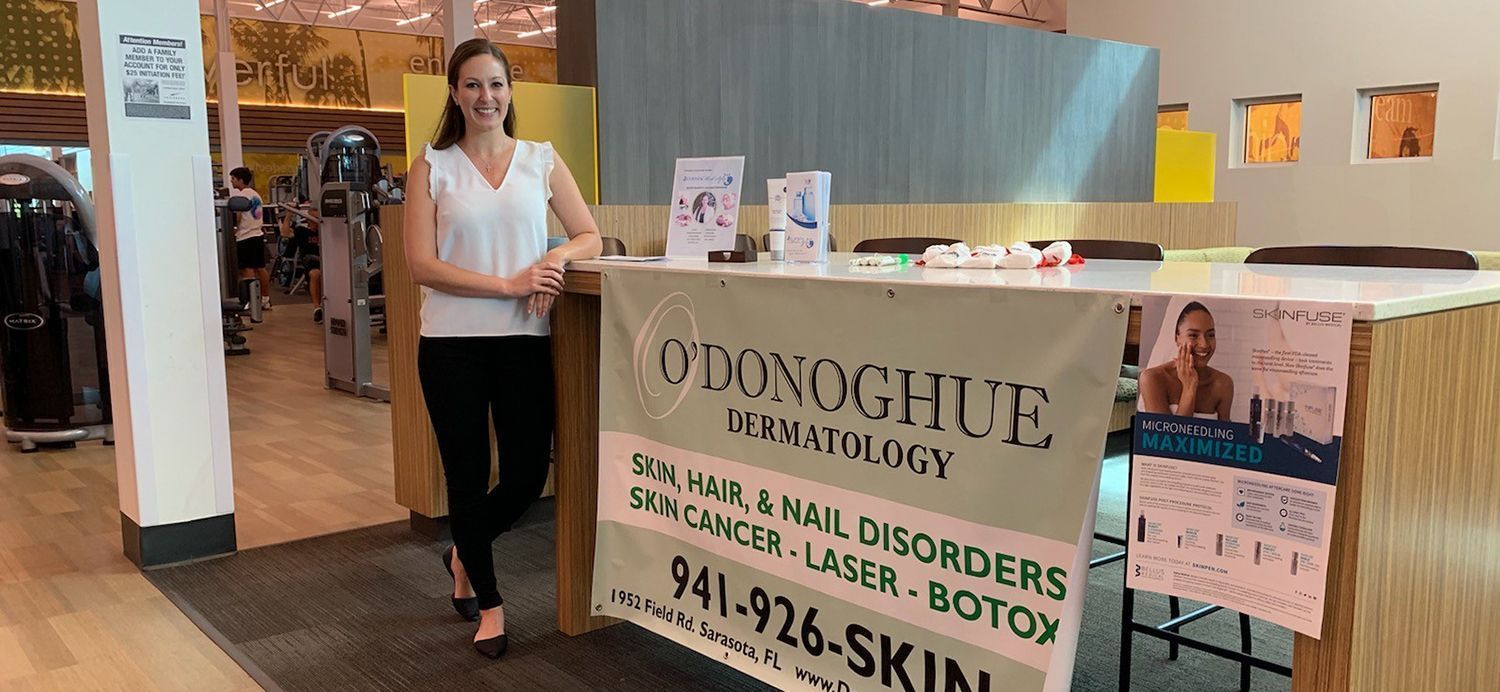
Dr. O'Donoghue's accreditations include: Graduate of the Georgetown University School of Medicine, Graduate of Tulane University Medical Internship and Georgetown University / Washington Hospital Center Dermatology Residency.

Many patients are concerned when they develop a bump that looks like a cyst.

This is usually a sebaceous cyst that is a closed sac found under the skin, usually on the trunk, neck, or face. They are filled with a oily or cheese-like matter and usually are painless.

In some cases, however, cysts can get inflamed and become tender to the touch. They are also called epidermal cysts, wens, keratin cysts, or epidermoid cysts. Most often, sebaceous cysts come out of hair follicles or can form as a result of trauma to the skin. Usually they are benign, but they must be differentiated from other potentially malignant bumps that can mimic cysts.

In some cases, the dermatologist will perform a biopsy to rule out certain conditions. If a small cyst becomes inflamed, a dermatologist can inject it with an anti-inflammatory medication to reduce swelling or just remove it entirely with surgery.


Are you at risk for melanoma?

Melanoma only affects 4 percent of those diagnosed with skin cancer, but it accounts for 79 percent of all skin cancer related deaths.

Anyone who has overexposure to the sun, regardless of skin color, has a higher risk for melanoma.

Individuals with blond or red hair, and fair complexion have the highest risk for melanoma. Also if you experienced excessive sun exposure during your childhood and teen years or have a family history of melanoma, you should have a skin cancer-related checkup.

The American Cancer Society recommends a checkup every three years for people between 20 and 40 years of age, and every year for anyone 40 and older.


What is Squamous cell carcinoma? How is it treated?

Squamous cell carcinoma (SCC) is the second most common cancer of the skin.

Patients with fair complexions who frequently sun bathe or use tanning beds are most likely to be affected. Some SCC's arise from small sandpaper-like precancerous lesions called actinic leratoses. About 20% of these precancers can evolve into the earliest for of SCC which may present as a warty-growth or a sore that bleeds.

Read more...


What is melanoma and how is it treated?

Melanoma is a malignant tumor of melanocytes which are found predominantly ion skin. it is a serious type of skin cancer that causes the majority of skin cancer related deaths.

Although fair skinned individuals are most commonly affected, darker skinned patients who tan easily can develop melanoma as well. It is due to uncontrolled growth of pigment cells called melanocytes.

Read more...


A More Natural Approach To Acne And Rosacea Treatments

Traditional therapies have relied upon both topical and oral antibiotics. At O'Donoghue Dermatology - we prefer a more natural approach. We start many of our acne and rosacea patients on a specific all natural regimen.

Therapy begins with a homeopathic oral spray which reduces redness, inflammation and breakouts. It is followed by a series of natural, pulsed light treatments that target and can permanently shrink inflamed blood vessels.

This is also combined with a specific diet that avoids the foods most commonly associated with rosacea flares. For more information - or to book a consultation - please contact us today.

If you are a new client - please click on the menu button to the left for a coupon good for a complimentary consulation.


Encourage Elderly Family Members to Examine Their Skin

Encourage Elderly Family Members to Examine Their Skin

Based on current estimates, substantially more than 1 million new cases of skin cancer are diagnosed in the United States every year. Melanoma, the deadliest form of skin cancer, is being diagnosed more rapidly in men age 65 and older than in the general population. A history of exposure to UV rays is a risk factor for skin cancer.

The American Academy of Dermatology (AAD) recommends that people lovingly remind their elderly family members to perform a skin self-examination for suspicious moles that could be skin cancer.

The Academy has created several tools to make it easy to determine if a mole is suspicious and should be brought to a dermatologist’s attention. The Academy’s Body Mole Map is a tool individuals can use to track their moles. The map provides information on how to perform a skin exam, images of the ABCDEs of melanoma and space for people to track their moles to determine any changes over time.